
Implant dentistry is the modern method of replacing missing teeth. Research shows that 85 percent of people who wear full or partial dentures experience some related discomfort and difficulty. Dental implants can eliminate those problems, restore self-confidence and improve the quality of life.
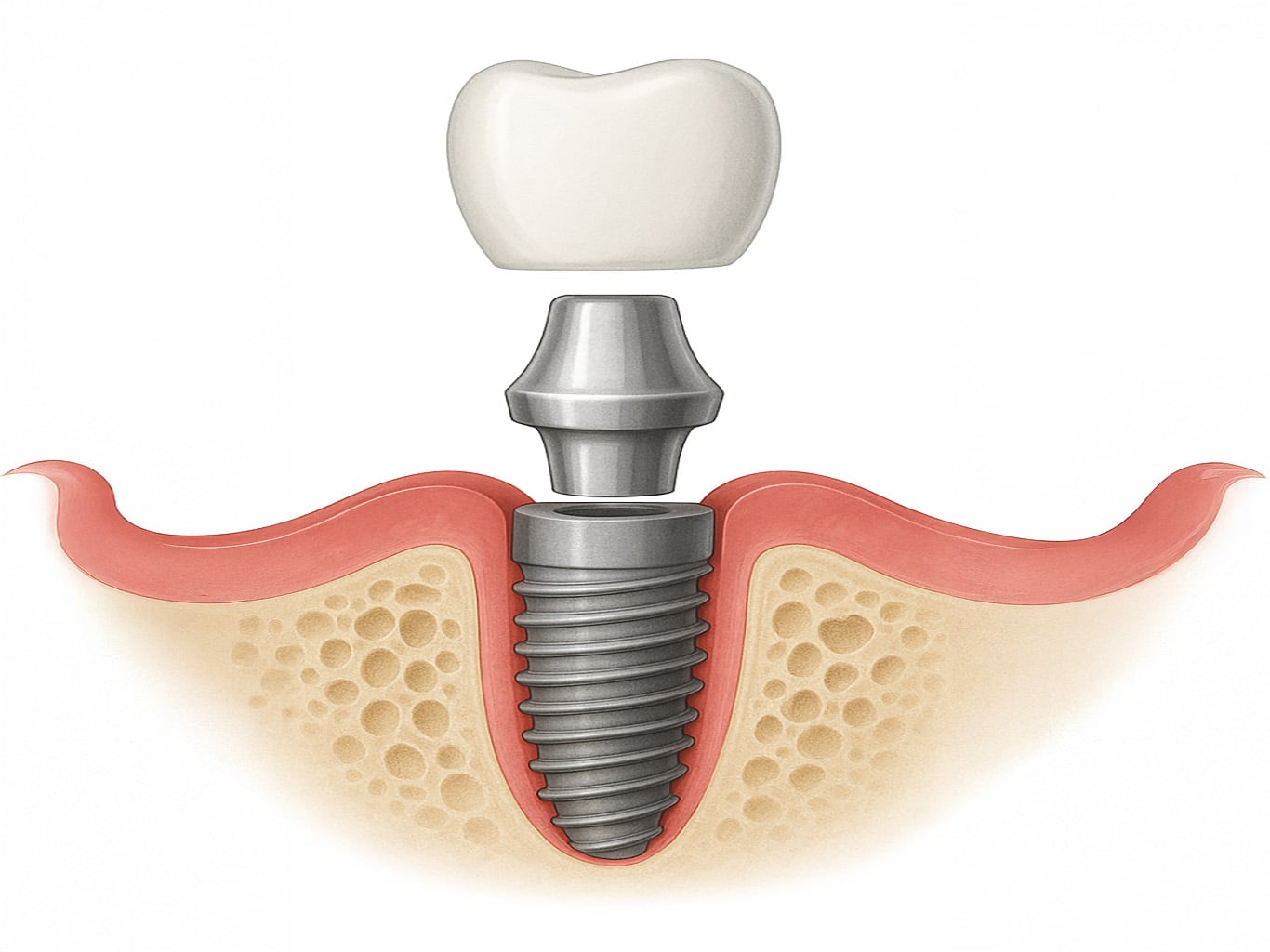
Traditionally, there have been several options for single or multiple tooth replacement. As a general rule, these methods have good esthetics but lack long-term stability, and adjacent teeth must be altered to provide the solution. In addition to the aforementioned problems, these methods also contribute greatly to bone loss in the area of edentulism.
Dental implants, on the other hand, do provide long-term stability, do not subject the adjacent teeth to any alterations, and prevent bone loss. In addition, implants may be used to replace several teeth. This type of replacement requires more than one implant.
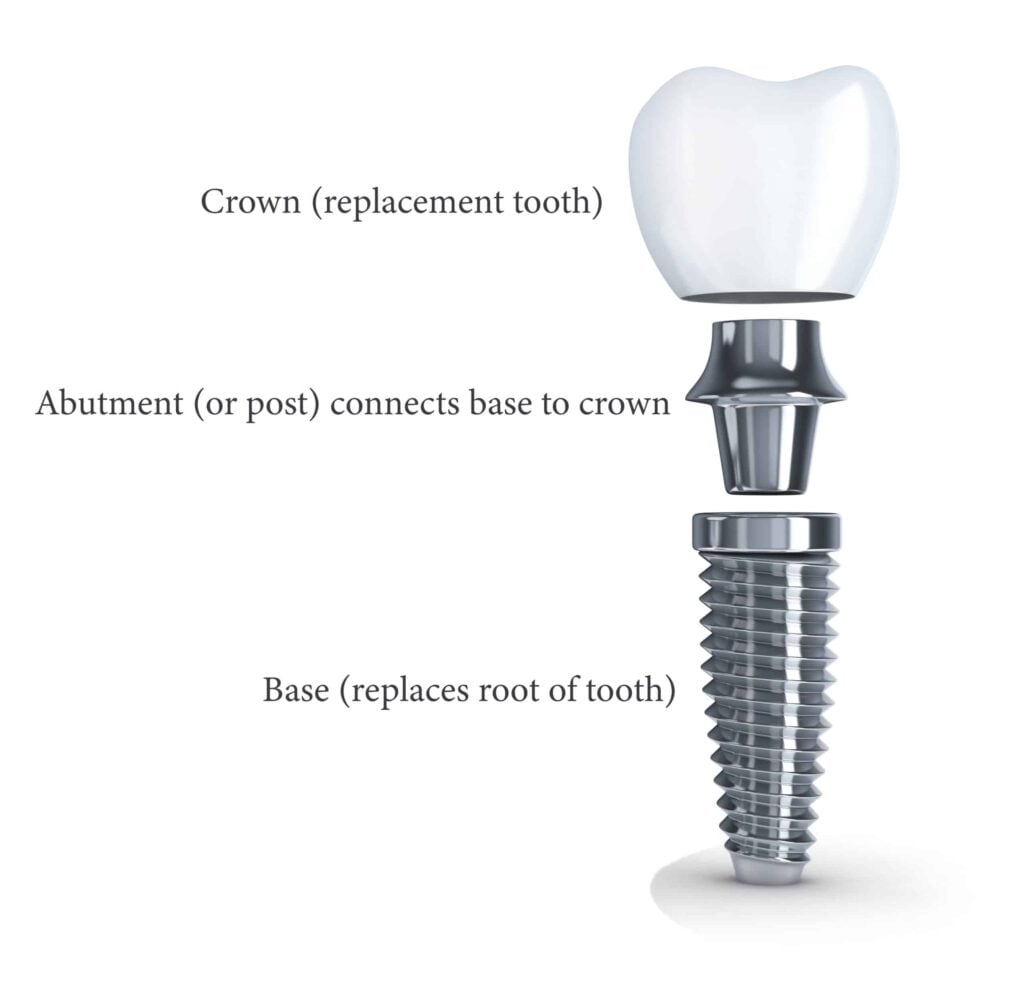
Placement of dental implants is a minor surgical procedure performed in one or two office visits. If you have one-stage implants, their metal tops will extend through the gums while your tissues heal, and you will not need a second surgery. If you have two-stage implants, they will be placed under the gums while the bone heals. You will need a second, simple surgery to uncover them and attach a post to support your replacement teeth. Your dentist’s decision to do a one- or two-stage surgical procedure depends on a number of clinical factors, such as the amount of available bone and the location of the implants. After the implants are placed, the bone attaches to them and permanently anchors them within your jaw. In the meantime, your dentist may adjust your full denture or partial prosthesis for temporary use.
Implants are made from a biologically-compatible and safe metal called Titanium. Titanium has been used for the purpose of dental and surgical implants for over 50 years.
The first and most obvious benefit is the enhanced ability to chew and enjoy your food. Implants also eliminate the inconvenience associated with removable teeth. In addition to these benefits, dental implants help restore that “full” look, rather than giving a sunken facial appearance.
Your dentist can do a full comprehensive evaluation to determine the availability of implants to you. Over the past 15 years, the option of dental implants is an one made available to nearly everyone through procedures that enable doctors to add bone in order to make implants viable.
Every patient is unique and presents a distinct situation. Generally, the implant process provides for three stages. Stage one involves the placement of the implants themselves, stage two involves uncovering of those implants to place abutments which protrude through the gum line, and stage three encompasses the placement of permanent abutments to which the final prosthesis will be attached. The entire process spans five to seven months, dependent upon the areas of placement. In addition, there may be other preliminary procedures that make implants possible, such as extractions and bone grafts.
This depends upon your situation. Most patients can leave the procedure wearing some type of temporary or interim prosthesis. Partial dentures or dentures can be modified as not to disturb the implants healing beneath the gums. Generally, we ask our patients not to wear full or partial dentures for chewing, although, they can normally be worn for cosmetic purposes only for ten days after the stage one portion of implant treatment. After this initial period of ten days, most appliances can be worn normally.
Implants are not new to the dental field by any means. The process and design of the procedure have been perfected since 1956. With modern procedures and placement in a sterile environment, the success rate for implants is very high. We currently experience a success rate in excess of 98%.
Absolutely! The Branemark System (the one we use) is the only implant system capable of demonstrating long-term safety and efficacy through international multi-center studies. In addition, it is the only implant system fully approved for intraoral and craniofacial reconstruction.