At The Smile Doctor, we take your dental care seriously. We want you to have the best, most hassle-free experience possible. We’re here for you.
Pain that ranges from mild sensitivity to sharp, throbbing discomfort is often the first sign that the inside of a tooth is infected. A root canal treats the source of the pain by removing the damaged tissue and restoring comfort.
A darkened or gray tooth may mean the nerve inside is damaged or dying. Root canal therapy removes the infected tissue and helps save the tooth before the problem becomes more severe.
Swelling, tenderness, or a small bump on the gums can indicate an infection spreading from the tooth’s root. A root canal stops the infection at its source and prevents further complications.
If an X-ray shows inflammation or an abscess near the root, a root canal is often the recommended treatment. It removes the infected pulp, relieves pressure, and protects the surrounding bone and gum tissue.
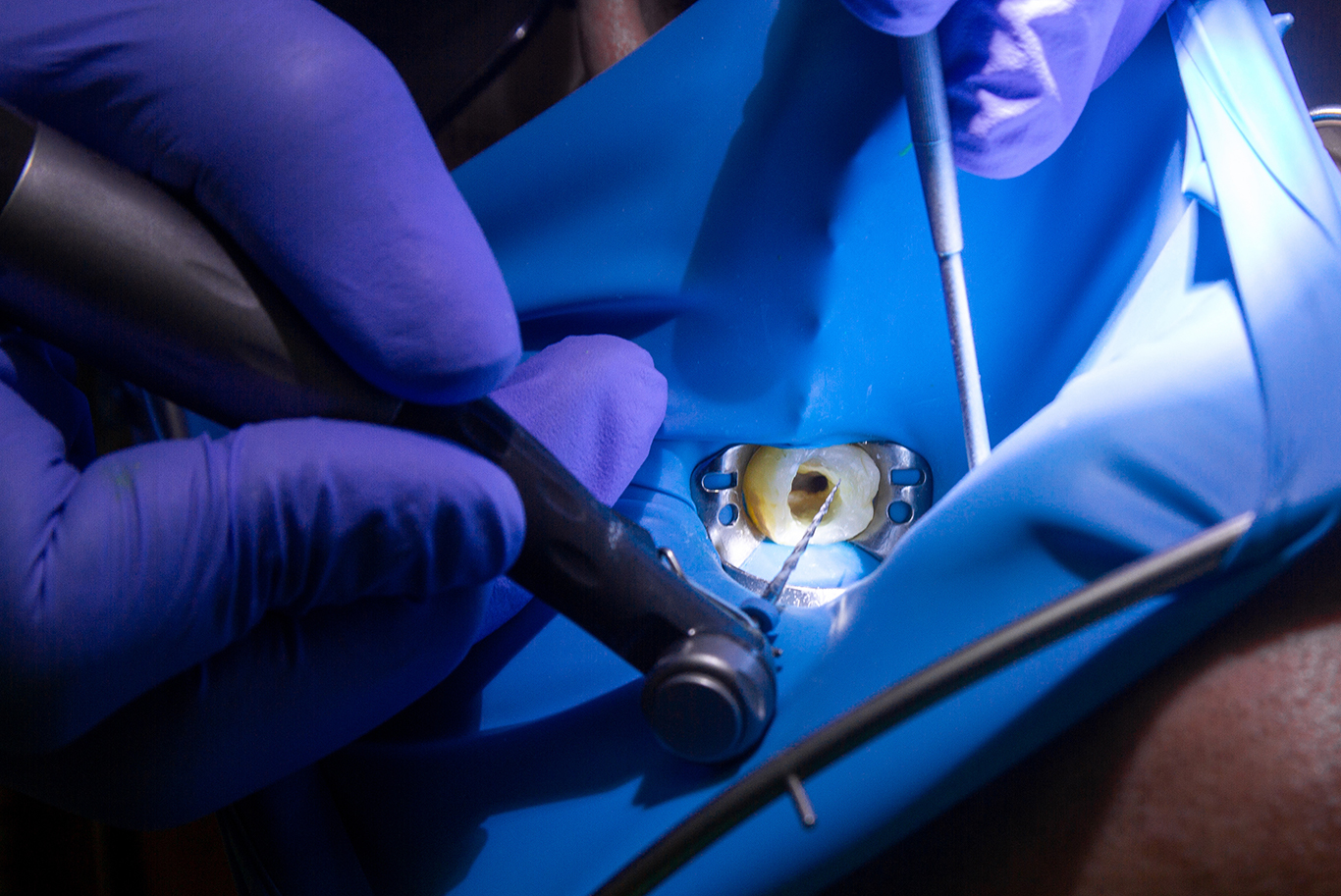
A root canal is a dental procedure that is used to remove diseased pulp tissue from the interior of a tooth. The narrow channels beneath the pulp chamber in the inner part of the tooth are hollowed out and cleaned, and the roots are filed with flexible nickel-titanium files.
A tooth is made up of three main components: a hard protective shell referred to as enamel, a softer and sensitive middle layer referred to as dentin, and a soft tissue inner layer referred to as dental pulp. Dental pulp is composed of nerve tissue, lymph tissue, and blood vessels, and is considered to be the vital part of a tooth. If dental pulp is sufficiently traumatized – whether by exposure to oral bacteria via deep dental caries, a fracture in the tooth that enters the pulp, or a forceful blow to the face – the tooth begins to die, and root canal therapy is often required to prevent or eliminate infection and prevent tooth loss.
A root canal procedure involves tooth disinfection and the removal of all debris (nerve tissue, lymph tissue, blood tissue, bacteria, and infection) from the coronal pulp chamber and its associated canals. Once an affected tooth’s canals are sufficiently cleansed and shaped, they are filled with materials designed to prevent pain and infection from recurring.
Dentists typically recommend a root canal in such situations to save the affected tooth and preserve its functionality.
Nerve fibers, blood, and lymph tissues are housed in the root canals. Located inside each tooth is a pulp chamber that funnels into those root canals.
A tooth can become inflamed or infected for several reasons, including severe tooth decay or a crack or chip in the tooth. Failing restorations, such as dental fillings and dental crowns, can foster bacterial leakage into the dental pulp. Once infected, the dental pulp begins to die, and the body’s inflammatory responses set in. The combination of infection and inflammation can cause significant pain. The result is a toothache.
In cases where tooth extraction is the only solution, the missing tooth may be replaced with a dental implant or dental bridge to maintain functionality. By replacing the missing tooth, a proper bite is maintained and the surrounding teeth are prevented from shifting. Because a severe infection can be very dangerous, it is important to receive a professional evaluation by a dentist who can look deeper into the cause of a toothache. If an infection spreads beyond the jaw to the head and neck, then more extensive medical treatment, including hospitalization, may be required.
Please reach out to our office today to learn more about root canal therapy, or use the online form to the right to schedule a visit.